
Messing With Texas, P2
A Look Back Into The Travel Archives At A Very Special Wedding

This week marks the sixth anniversary of Little Bean’s uncle and aunt’s amazing wedding in Texas, and though we wrote quite a bit about it on other social media, we figured we’d bring the adventure here for you today and tomorrow.
The days we spent there were really unlike anything we’d experienced before and the memories of that wedding still linger. My brother and sister-in-law gave me permission to write about it back then, so I hope it’s fine now.
Five chapters. Two yesterday. Three today. We’re calling it Messing with Texas.
Chapter Three: Feathers
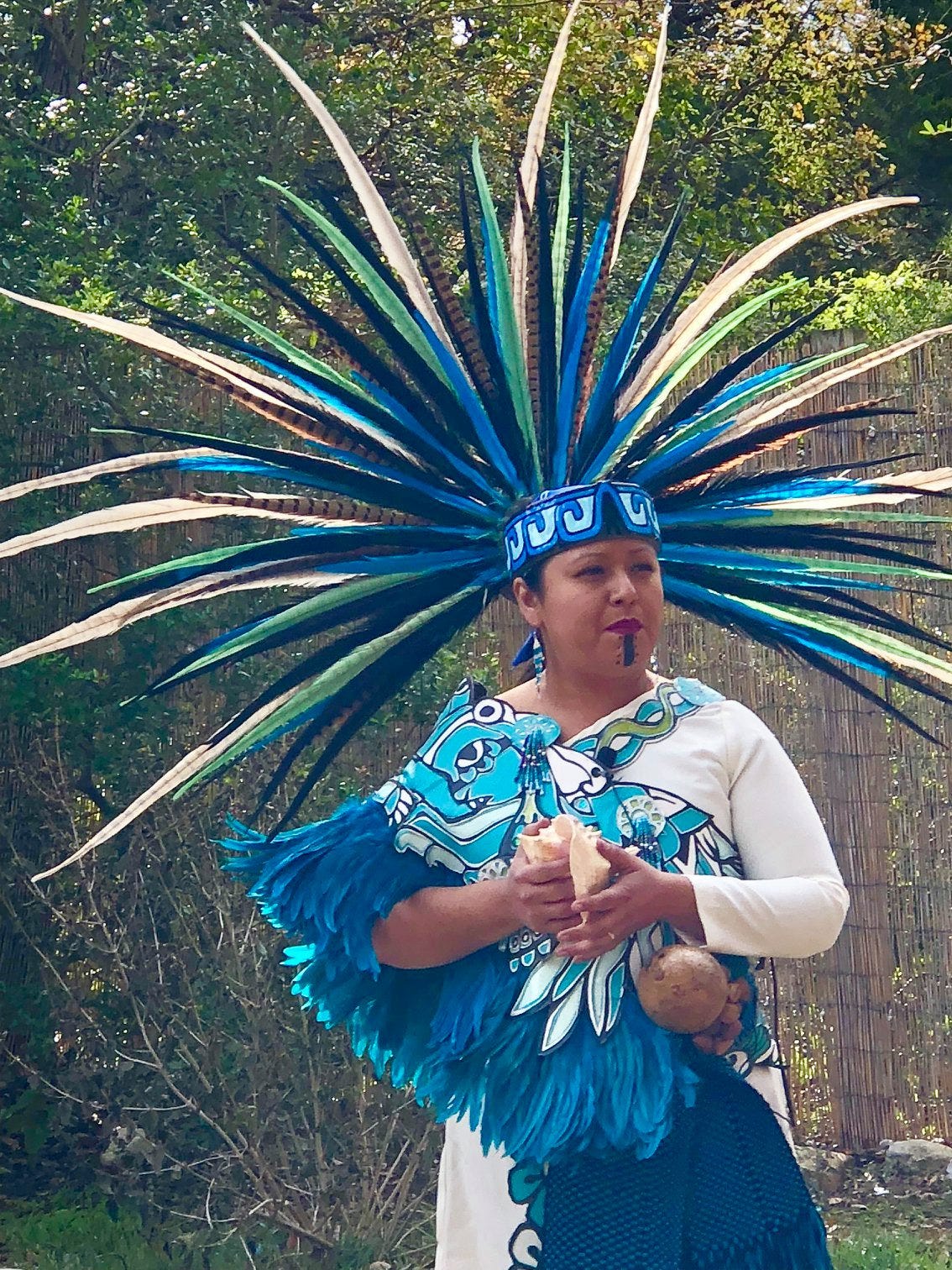
You just stand there and stare; it’s rare for you to be struck motionless, baby. But then again, you’ve never been face to face with a group of Azteca dancers. The colors and feathers of their costumes explode in brilliant blues and yellows.
We are in a little procession behind the dancers, getting ready for the call for the ceremony to begin. The dancers will lead off a multi-culture wedding ceremony that will include rituals to celebrate both your soon-to-be-aunt’s Mexican heritage, your uncle’s Nepali tradition and a tip of the hat to the couple’s more traditional family roots.
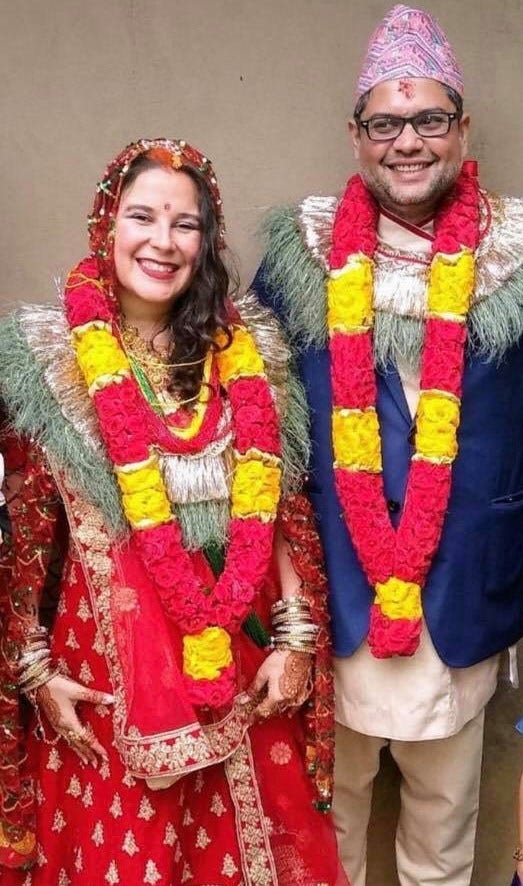
This is all a wildly preposterous and gloriously beautiful idea – to bring all these cultural touchstones together in the courtyard of a wedding resort high on a hill in rural Texas. I’m wearing my traditional Nepali wedding suit; the same one I wore nine years ago when I married your mother in an equally elaborate ceremony in Kathmandu. (It still fits though is a bit tighter.) Guests run the gamut, from traditional suits, to cowboy boots and fringe to sequins. We are a group of humans from around the world and have gathered in the sage and brush on a warm November afternoon to celebrate love.
“Daddy, what are those things?”
You’re pointing to the ankle bracelets the dancers are all wearing – seed pods about the size of chestnuts strung together. When they walk or stomp, the anklets rattle.
“Why don’t you ask?”
But you’re shy. “Come with me,” you suggest.
We approach a woman decked out in brilliant teals, her enormous headdress flaring out above her hair like feather fireworks.
“Excuse me,” you ask in a timid voice, “but what are those?”
“Those are ayoyotes,” she says, “they are seeds from the ayoyote tree. You can touch them.” The anklets are designed to sound like the pitter patter of rain.
“Where did you get all those feathers?”
“In my life, I’ve gathered these feathers from different places I’ve been and many different beautiful creatures I’ve seen,” she says. “They are all a part of who I am. Would you like to touch them as well?”
She turns sideways so the feathers extend out toward you and I lift you up to shoulder height. “Be gentle,” I say.
You run the tip of your finger over the length of one of the long, white feathers, slowly and deliberately. And I think to myself, once again, here you are, a little girl, the child of a Polish father with Italian and German blood and a Nepalese mother raised in Chicago, engaging fully in yet another ritual and cultural touchstone that extends thousands of years backward into the fog of time. A ritual which, this time, I can’t teach you. This time, we are learning together; figuratively and literally, another feather in both our caps.
The procession begins as the dancers lead the way, drums reverberating and ayoyotes shaking, a tiny parade. Your mother and I take your hand on either side and we make our way up the aisle to a front seat for the proceedings. You sit on the edge of your seat.
I watch you watch them. One of the dancers steps forward, takes a deep breath and blows mightily into a giant conch shell – like a fog horn, a signal, the opening of the door to the spirit world and a signal for the Gods to pay attention!
Your eyes are saucers. The couple arrives. All our ancestors await the call. A new ceremony begins.
Chapter Four: The Gods Pay Witness to Mere Humans
The Hindu Pundit, a friendly man whom I had the pleasure of driving to the wedding along with his wife, sits off to the side – in his own little alter area – watching the Aztec dancers.
I’ve never seen you sit so still for a ceremony as you are for the dancers, baby. And it occurs to me to wonder – as the dancers call first on Tonantzin (the Earth mother) and then Tonatiuh (the Sun god) – how rare it may be for both of these ancient rituals and both alters to be created for one wedding side by side. The participants in the Nepali ritual look on with interest as the Aztec dancers celebrate. And later, the dancers would watch in wonder as the equally ancient traditional Nepali ceremony unfolds.
The dancers operate – more or less – in the tradition of the Mexican Concheros dance – though with strong visual elements of its pre-Hispanic roots with the feathered regalia and indigenous dance steps. I hesitate to hang the ceremony directly onto any specific tradition because, as is the case with all rituals of this sort, the actual tradition changes and evolves based on region and even family. In this case, the ceremony and dance come from the group your aunt belongs to and has been modified to represent the couple’s individual faith and life traditions.
Meanwhile, the similarities between the two cultural touchstones are remarkable. Both use fire and smoke – as incense and as a witness to the gods. Both make direct appeals to the earthly elements and the four corners of the earth. Both call on the couple’s ancestors to bless and protect the marriage. And both use food as a symbol of spiritual sustenance. (Your uncle takes a big bite of a hot pepper and bravely powers his way through the aftermath.) And my favorite; both literally tie the couple together with sacred garments, a moment designed to symbolize the connection they now share.
Reflecting in your eyes, baby, is a millennia of tradition and the ancient and ongoing play between the heavens and the earth.
The message? We are all different. We are all the same.
Near the end of the Aztec ceremony, your grandma asks me if I could MC the Nepali ceremony and act as an in-between to the guests, most of whom will have no idea what’s happening. The Nepali ritual is more intimate, closed in and personal. I agree that it might be nice to have a translator, but whoa boy, it’s been a while since I’ve done any background work on the ritual.
But it’s your grandmother, so I say “Of course!” without hesitation.
There’s a break in between ceremonies as your aunt and uncle change clothes and the Nepali priest gets ready for his part in the wedding play. I take the time to brush up on some history and jot down some notes about what I remember happening at our wedding.
And you, baby, well, some of your cousins and a whole group of new friends have arrived and your party is just starting. You and a scrum of kids bee-line the snack line, and I think to myself, when did you get old enough to just run off and play with your friends?
“She’ll be fine,” your smart mother tells me again and again. “Let her be.” My brain knows this, of course, but here in a courtyard getting ready for essentially the same ceremony that brought your mother and I together four years before you were born makes it all feel full circle and too fast. I’m raging with conflicting emotions – I’d like for you to watch this ceremony because it relates so deeply to you, but I also know that the best bet we have of you remembering this day is to let you be, let you play and let you inscribe your own memories of this fine afternoon in Texas. So that’s what we do.
Meantime, the bride and groom, replete in the finest of Nepali wedding ware take their place – your aunt’s parents with them – and I begin to carefully walk the guests through the ceremony. I try to be as general in my descriptions as I can, leaving lots of wiggle room for personal interpretation.
The fire burns – calling on the fire God Agni to pay witness to the couple. Fruits and offerings are made and the father of the bride gives away his daughter through blessed water poured over his hands. Finally, a necklace of marigolds and grass is exchanged. The priest beats me to the description of that event and tells attendees that the couple is now officially married. Everyone applauds, and there are more than a few hoots and hollers!
I glance in your direction, baby, feeling suddenly melancholy – you and your little new friend, Simon, are enjoying plates of cheese, cookies and, of course, sausage, fully content and fully engaged. You’ll remember this day, I’m sure of it.
The priest walks through the remaining parts of the ceremony – listing the ancestors to look down and be present, the moment when your uncle must lift your aunt from one cushion to the next and, of course, like the Aztec ritual, the two are tied together and must walk around the fire as a signal to the Gods of the final covenant between them.
The morning slips into afternoon, the rites conclude, the beautiful couple make their way inside for more pictures and another change of clothes. I watch my wife work with the priest, help with translations and make sure the alter area is cleared and think about how fortunate I am to even be here.
After a bit, I wander over to where you are playing with your friends, my colorful child of the ages. Your eyes sparkle.
“Watcha doing?” I ask, and bend down to kiss the top of your head. “Are you having fun?”
“There’s going to be a piñata, daddy!”
“Oh wow!” I say. “What’s inside a piñata?”
“Candy!” the children shout in unison, delight in their collective voices.
The hill country begins its transition into evening. The guests tip their fedoras and smile over their wine. The rituals complete, both families release a sigh of relieved connection and prepare for an evening of celebration.
Finally, the fires extinguished, the ancient Gods return to the heavens leaving the music and the sweets and the love to us humans. We are all just children after all, and just beginning.
Chapter Five: Tiny White Moths
After toasts and champagne, after enormous portions of food and sweets, after the ritual area has been cleaned and everyone has switched to evening clothes, after dark and after the tiny lights illuminate the courtyard and outdoor dance pavilion, the clans gather to blow off steam.
A ritual of its own, the post-ceremony dance party begins – that explosive released of relief after the anxiety of the solemn rites; an accepted, purposeful descent into madness, as Nietzsche would say.
“Those who were seen dancing were thought to be insane by those who could not hear the music,” he wrote.
But I prefer Anne Morrow Lindbergh’s observations on marriage and music, that love is an understanding of the rhythm of movement - like two dancers, each perfectly in sync with the other, barely touching yet moving to the same beat.
Before heading over to the dance hall, I have a few extra minutes to spare and take a slow walk through the now empty marriage grounds. On the far side of the field, a constructed waterfall splashes into a lit basin and tables and chairs lay turned this way and that – the area is now a field of past commitment, a disheveled monument to your uncle and new aunt’s future.
But a new group of humans have emerged on to the field.
This place is now the rightful territory of the children; they have annexed this piece of land for their own tribe. A group of them, including you baby, are playing soccer. For goals, on one side of the field is a recycling bin on its side and on the other side is a play crib, also on its side. (I instinctively take a peek into the crib to make sure, you know, the older kids haven’t overturned a baby along with the goal. All clear!)
How remarkable that all of you from all different points on the map have come together for a pick up game of soccer, as children all around the world do. Content that you are safe and occupied, I prepare to head off toward the cake and thumping music. But you have other ideas.
“Daddy!” you shout, gripping my arm, bouncing and giggling. “Play with us, play soccer!”
I hesitate, but really only for a split second. Given the choice between a game of pick up soccer on a warm Texas evening with a gaggle of little kids dressed in suits or dancing with the adults, well, the kids will win that coin toss every time. The adults won’t even know I’m missing.
“Right,” I say, “let’s play!”
The parents of your new friend, Simon, show up and you shout “Adults against kids!” and it is on! Somewhere behind us, Bollywood thumps the beat of our kicks and the kids swarm when one of the adults has the ball. There’s shouting and shoving and all those nice clothes get grass stained, and the ball even finds its way into a net or two.
After a while, Simon wants to go dance and the other kids drift off, and you drape yourself dramatically over the play crib, like some 1930s actress swooning because she didn’t get her way.
“Daddy, they don’t want to play!”
“I know, baby, but some of them want to dance. Everybody can do a different thing.”
But you’re pouting. No meltdown, but the potential is there.
“I have an idea, come here.”
I lift you onto my shoulders and you cackle and I bounce to the beat as we make our way to the dance floor. But it’s not in the cards today. “Daddy! Wait! Hurry, put me down!”
There near the front of the pavilion, dozens of tiny white moths are swarming, flitting about near the lights. Some drift down into the grass while other do crazy loops over our heads. I put you down, and you say, “Daddy, let’s get them, come on!”
And that’s our evening – you and I chasing moths in the night. “Look daddy!” Very slowly you open your cupped hands to reveal a single moth. In the light, the moth flutters away, up, up into the dark sky. We stand and watch for a moment, until the creature is gone.
“It’s time to head out, baby,” I say.
You take a deep breath. “Can you carry me, daddy?”
I do. I carry you back to your mother, back to our car, back to the hotel and then back home. All the while, the dancers dance and the music rises and falls, and finally drifts into silence. We’re going home.
Tomorrow morning, we head back to Nepal for our weekly Wednesday Kathmandu Days. First stop, some airport music!
I love when ancient traditions come together like this!
Uma will remember this time forever! Weddings make such an impression at this age…especially one as grand as this!