
Interviews By Uma: Chris Packard
The Cryptozoologist On Bigfoot, Science And The Famous Maine Museum

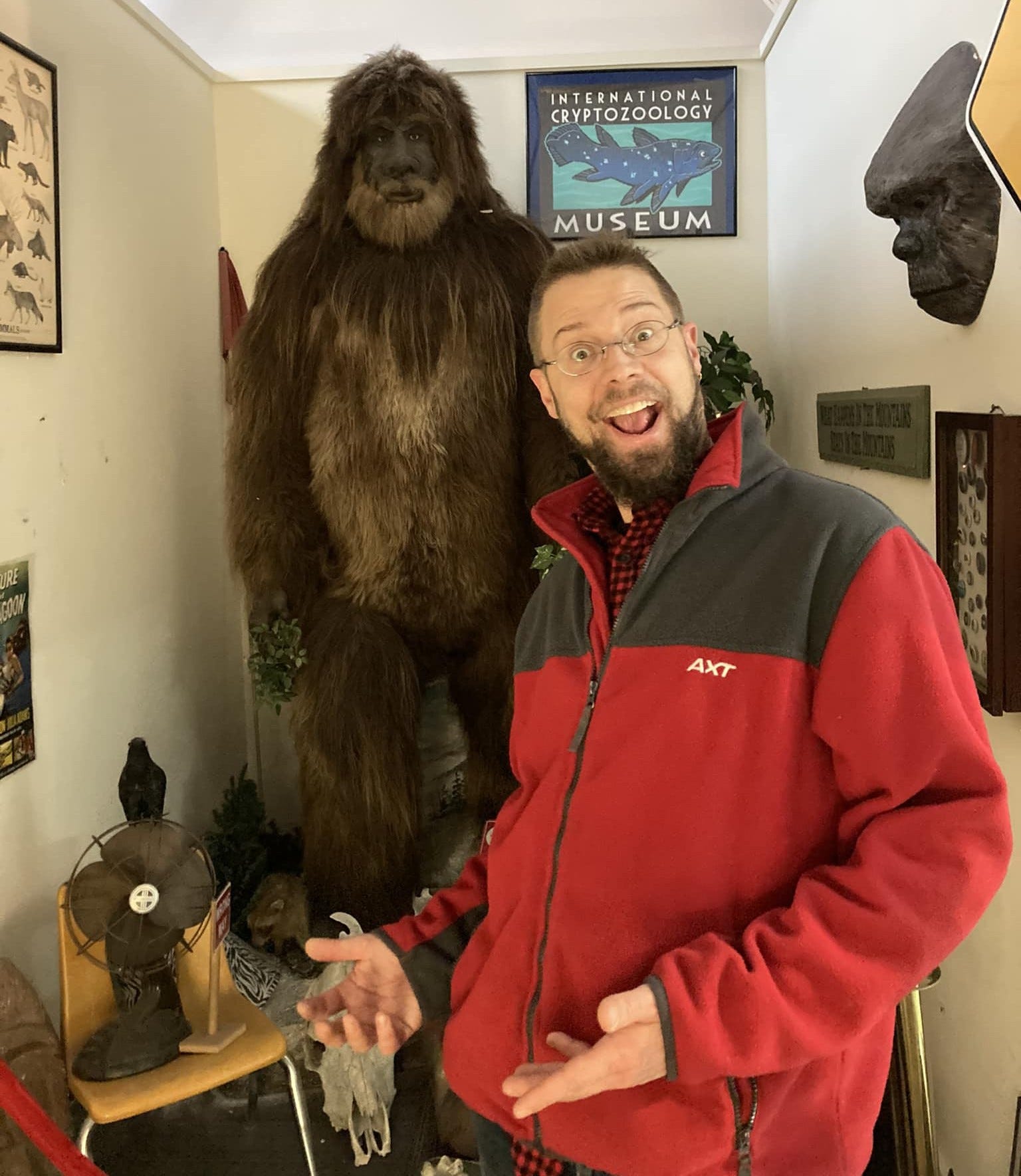
Biologist, botanist and Bigfoot fan Chris Packard is spreading the word about the world of cryptids
The Assistant Director of the Maine-based International Cryptozoology Museum talks to us about the power and fun of myths and legends
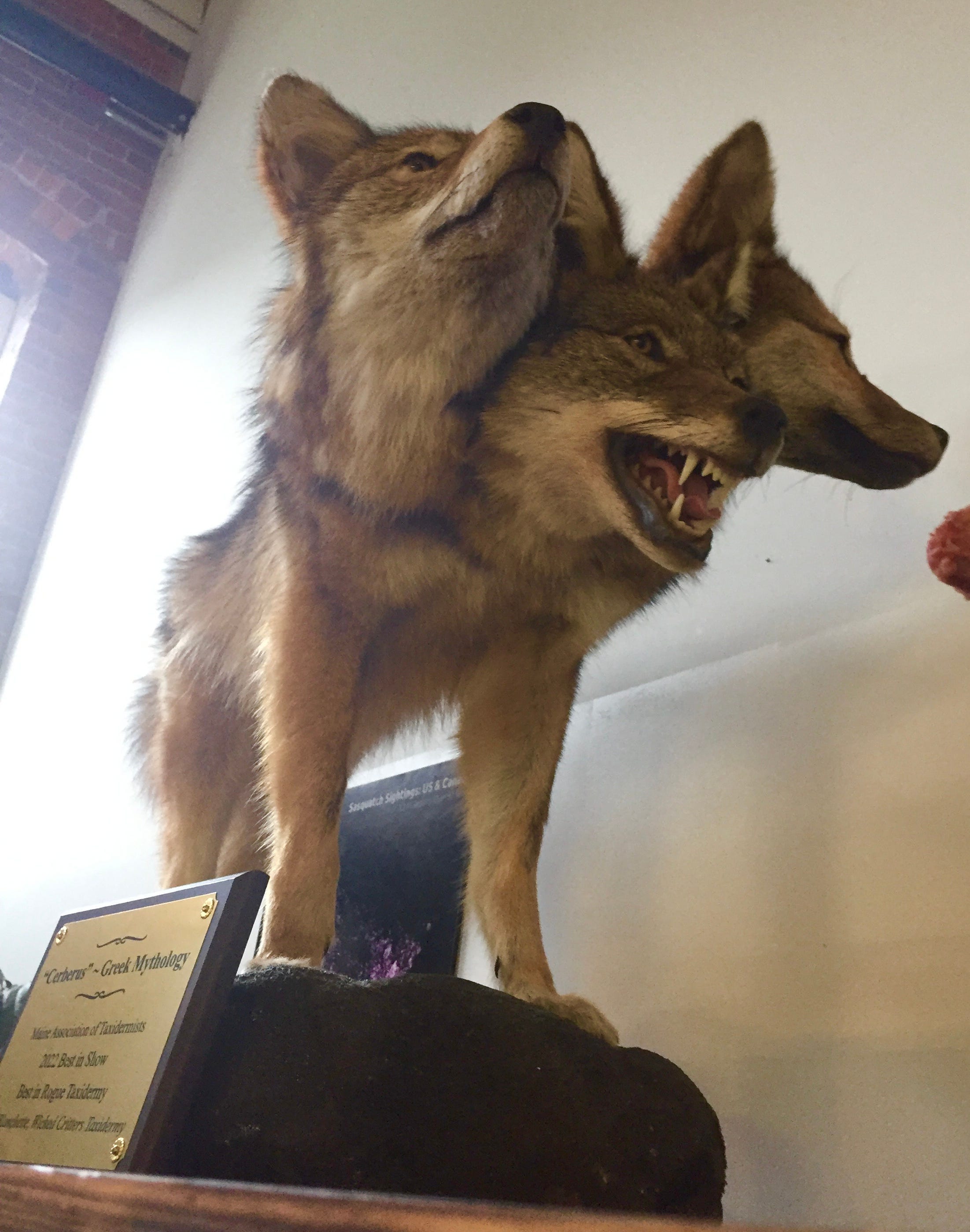
Of the thousands of items to be found within the packed rooms and walls of Portland’s International Cryptozoology Museum (ICM), Uma never expected to be most drawn to a three-headed coyote!
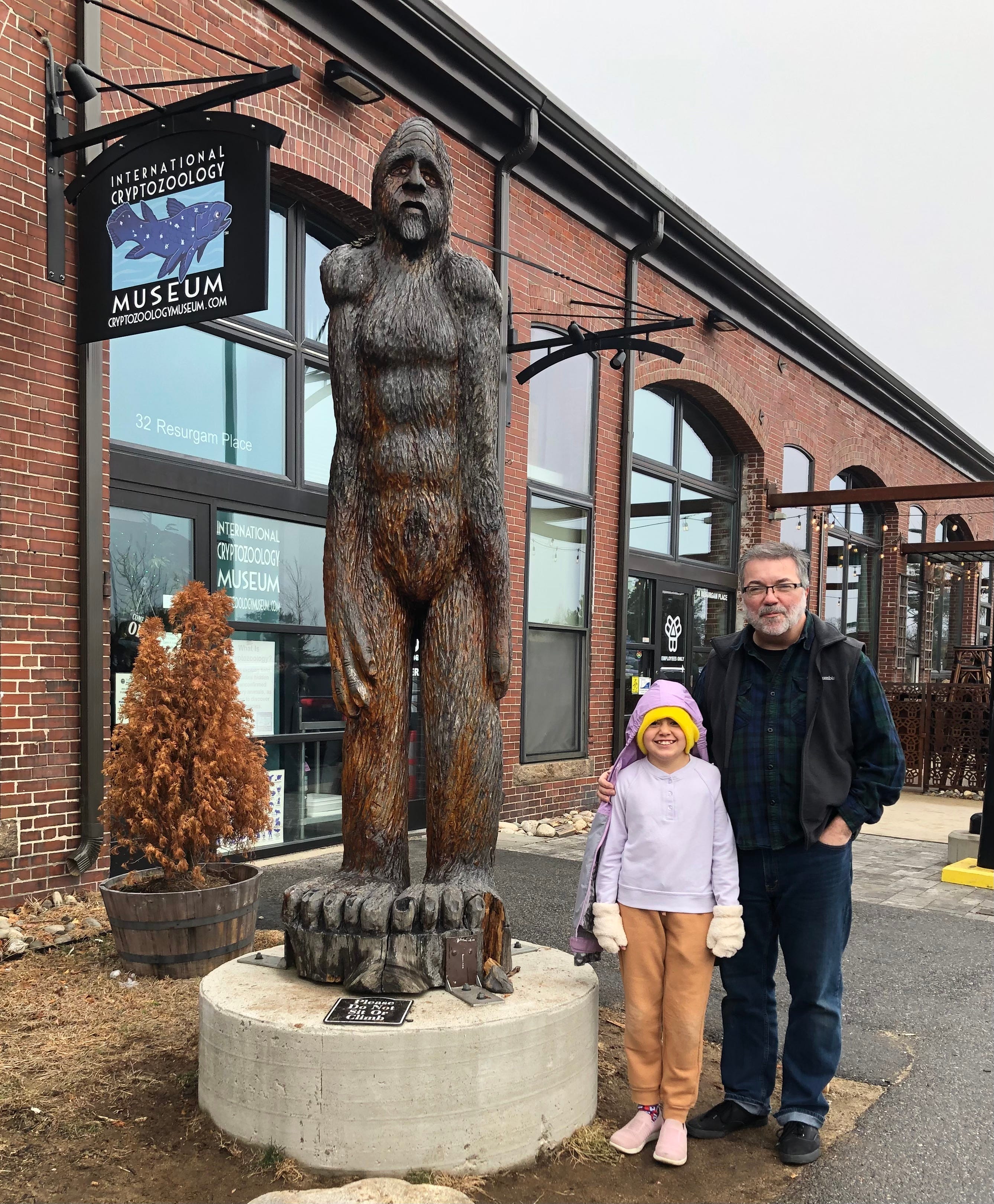
Our initial excitement about finally visiting the museum had to do with the two primary cyptids that everyone knows, Bigfoot and the Loch Ness Monster. Both those creatures played a pretty big role in my own childhood as well.
When she was little, one of her favorite picture books was about Nessie, and how she was just a big ol’ misunderstood creature just trying to help people. Uma named a rock outcropping in a nearby park Nessie’s Humps and we even got to visit the Bigfoot bench up in northern New Hampshire a couple years ago.
Our visit to the museum was enlightening and interesting, but most of all fun! How fun you ask? Well, there’s a whole rotating glass cabinet of poop models, comparing what each look like. There’s a giant squid stuffy. There’s the Creature from the Black Lagoon standing next to the FeeGee Mermaid.
The ICM is the brainchild of Loren Coleman, an academic and leading authority on Bigfoot and other fantastical beasts. Founded in 2003, the museum has moved around a bit, but currently finds itself tucked next to a brewery, behind the Portland train station and across the road from the Maine Children’s Museum.
The museum is moving to a permanent home in Bangor early next year so we wanted to catch up on what’s happening, what’s next and just what the heck is with that Mothman anyway!?
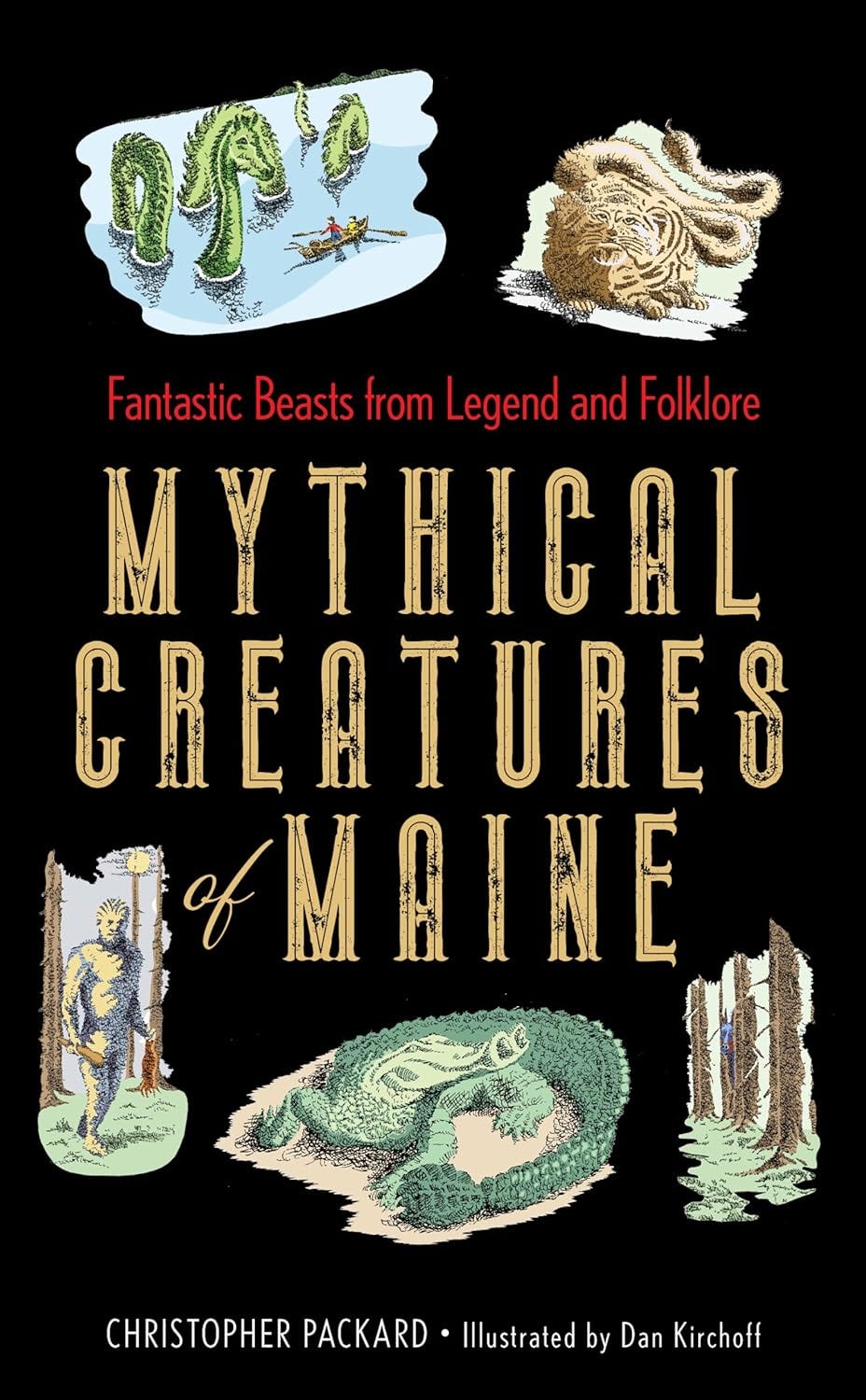
Our guide for all things ICM is museum assistant director Chris Packard. Besides being a biologist and science teacher, Chris is a writer and storyteller and helps organize the Fort Knox Paranormal Fair. He does talks and traditional performance storytelling of Maine creature legends across the state. He’s also written two books: Mythical Creature of Maine (Down East Books, 2021), which is a field guide to the mysterious, magical, and cryptozoological creatures traditionally found in Maine, he and his wife have also published a children’s book, Lumpy’s Gift.
Chris chatted with Uma about all things mysterious, and even suggested some more science-based ways that kids can become invovled with the mysteries of the outdoors. For more information on the ICM or on Chris, you can link to the museum at International Cryptozoology Museum.
Watch this short on the most famous Bigfoot film every recorded and then enjoy Interviews By Uma with Chris Packard!
Interviews By Uma: Chris Packard of the ICM
Uma Szczesny (US): The three-head coyote is my favorite thing at the museum. Can you tell me more about it? Where did it come from and what it means?
Chris Packard (CP): The three headed coyote is one of our newest exhibits, it’s one of my favorite’s too. It’s called “Cerberus” and the award winning mount was created by Amy Blanchette of Wicked Critters Taxidermy. She donated Cerberus to us last May. Cerberus is from Greek culture, they believed that Cerberus is an immortal three headed dog that guards the underworld and keeps the dead from leaving. We think a coyote with three heads is the perfect “cerberus” for America, the only place coyotes can be found. Originally coyotes were only found in the western United States, but starting in the late 1800’s a huge and expensive effort was made by the US government to exterminate coyotes, wolves, and other predators. Wolves were driven to extinction in most of the United States by this effort, but instead of dying coyotes became even more common and spread across the continent, coyotes weren’t found in New England until the 1930’s! A coyotes Cerberus is also a perfect American creation because Coyote is a very important figure in many Native American cultures in the West. He’s a trickster, who gets himself into a lot of trouble, sometimes he is helpful and sometimes he’s a trouble maker, and a lot of times what he’s up to gets him killed, but he never stays dead in the stories.
US: How did you or Loren get the idea for a Cryptozoology Museum? Where did it all start? How many items are in the museum?
CP: Loren Coleman is definitely the founder of the Museum. He’s been writing books and investigating cryptids for decades. He started the museum in his house in 2003, and opened the first dedicated location in downtown Portland Maine in 2009, the first location was in the back of the Greenhand Bookstore! Loren noticed that many cultural objects that celebrate cryptozoology in popular culture (like movies and TV shows) were being destroyed or lost and he wanted to make sure they were saved. When the museum opened I think one of his goals was too share his personal collection and make sure it was preserved into the future. I became the assistant director in 2023, when the museum started the process of moving to our new permanent home in Bangor. I had just published a book on Maine creatures called “Mythical Creatures of Maine,” and I got to know Loren through that book, and since I was in the Bangor area and putting together a lot of events and projects here he asked me to be a part of the Museum and I’m glad he did.
US: Have you personally seen any unexplainable creatures in the wild?
CP: I’m a biologist and botanist and I spend a lot of time outside. I’ve seen lots of cool plants and animals over the years. I’ve definitely had some strange experiences. One of the most interesting unexplainable things I have seen in the woods was back when I was a teenager. My girlfriend and I were looking at the stars on the dock at my family’s camp deep on Sebec Lake in Maine. We’d been out there awhile when we both noticed that there were two large balls of light, about the size of basketballs, floating through woods between us and the camp, maybe 10 or 15 feet up in the air. They just moved through the air along the shore at about the speed people walk, until they disappeared into the woods about 100 yards down the shore from us. The lights didn’t make any indication they knew we were there but seeing them kind of freaked both of us out because we couldn’t explain it. There are stories about orbs of lights floating through the air in just about every culture all around the world and I know this isn’t just a story, it’s something that actually happens.
US: What’s your book about?
CP: Mythical Creatures of Maine is an encyclopedic collection laid out like a field guide - it features over 40 creatures said to be found in the woods and waters of Maine and which can be found in the stories and folklore of the various cultures who have called Maine home throughout time. I came to write the book because my grandfather was a hunting and fishing guide in central Maine (where my family has been for 150 years) and I grew up hearing about all sorts of strange creatures in the woods. I took these stories for granted and really didn't think much of them until I came across a few similar ones in an old folklore collection. I then realized that these were part of an oral tradition of lumberjacks and sporting guides which went back to the early 1800's. I got a little obsessed with collecting these stories from old sources and people around Maine before they were completely lost and decided to put them in a book.
US: What’s your favorite urban legend?
CP: One of my absolute favorite urban legends is the Not Deer. They are nocturnal predatory creatures that look like deer, but they are not quite right. They have rough fur, forward facing eyes, and they move with a jerking gait, making whistles and clicks. And very unlike deer, they show no fear of humans, moving towards them. This story didn’t start being told until someone made a Tumblr post about them in 2019. Technically I think that makes the story something folklorists call “Creepy Pasta” but today lots of people are interested in this creature and have experiences they think are encounters with Not Deer.
US: What’s your favorite item in the museum and why?
CP: My favorite artifact also happens to be the very first artifact ever collected for the museum. It’s the flag from Sir Edmund Hillary’s 1960-1961 Silver Hut Expedition sponsored by World Book Encyclopedia. The expedition’s goals were to search for proof of the Yeti (or Abominable Snowman) and to collect evidence to support the claim that Mt. Everest could be summited without supplemental oxygen. They did this by being the first to spend the winter at 20,000 feet and then attempt the summit of the fifth tallest Mountain - Nepal’s Makalu (27,790 feet (8,470 m)) - without oxygen. The yeti searches were conducted in Rolwaling Valley, a place said to be a Yeti stronghold, and it was the location where mountaineers Eric Shipton and Michael Ward, along with their guide Sherpa Sen Tenzing, had photographed the famous Yeti footprints in 1951.
US: A couple more things I’m really interested in are the giant squid and mothman. Can you tell us about those cryptids and the museum items of them?
CP: Mothman is a big focus of the museum, we have a whole section upstairs dedicated to Mothman. This guy is one of the most popular cryptid, we have several pop culture items and some statues of mothman. Mothman is a winged humanoid creature with large eyes. This creature was first described in the mid 1960’s in Point Pleasant, West Virginia - many books have been written about Mothman, including one by Loren.
We do have a few pieces on the giant squid! Someday I hope we can get a beak from the colossal squid to display, it’s the only hard part of their body. It’s hard to imagine a 14 foot long squid. I’m sure these were the inspiration for the mythical kraken. I think it’s amazing that the first living giant squid was not observed until 2004! It just goes to show how much more we have to learn about the world.
US: Can you tell us about the museum moving? And how do you store things during a move like that?
CP: We are really excited about our new forever home in Bangor, we should be open here sometime in early 2026. The new building is several times as large as our current space and has storage, and best of all we own it. We're looking forward to having enough space to display and curate everything! The new museum building is a historic landmark as well, it’s really cool with curved walls and huge glass block windows; in fact it’s the only surviving example of Streamline Moderne architecture in Maine. Moving is going to be quite the process, since we have to carefully pack and pad and catalog everything into boxes, then move the cases, and then unpack them in the new space. We’re hiring professional movers to help with a lot of the moving - because we don’t have a large staff and we don’t want to be closed for longer than we need to be.
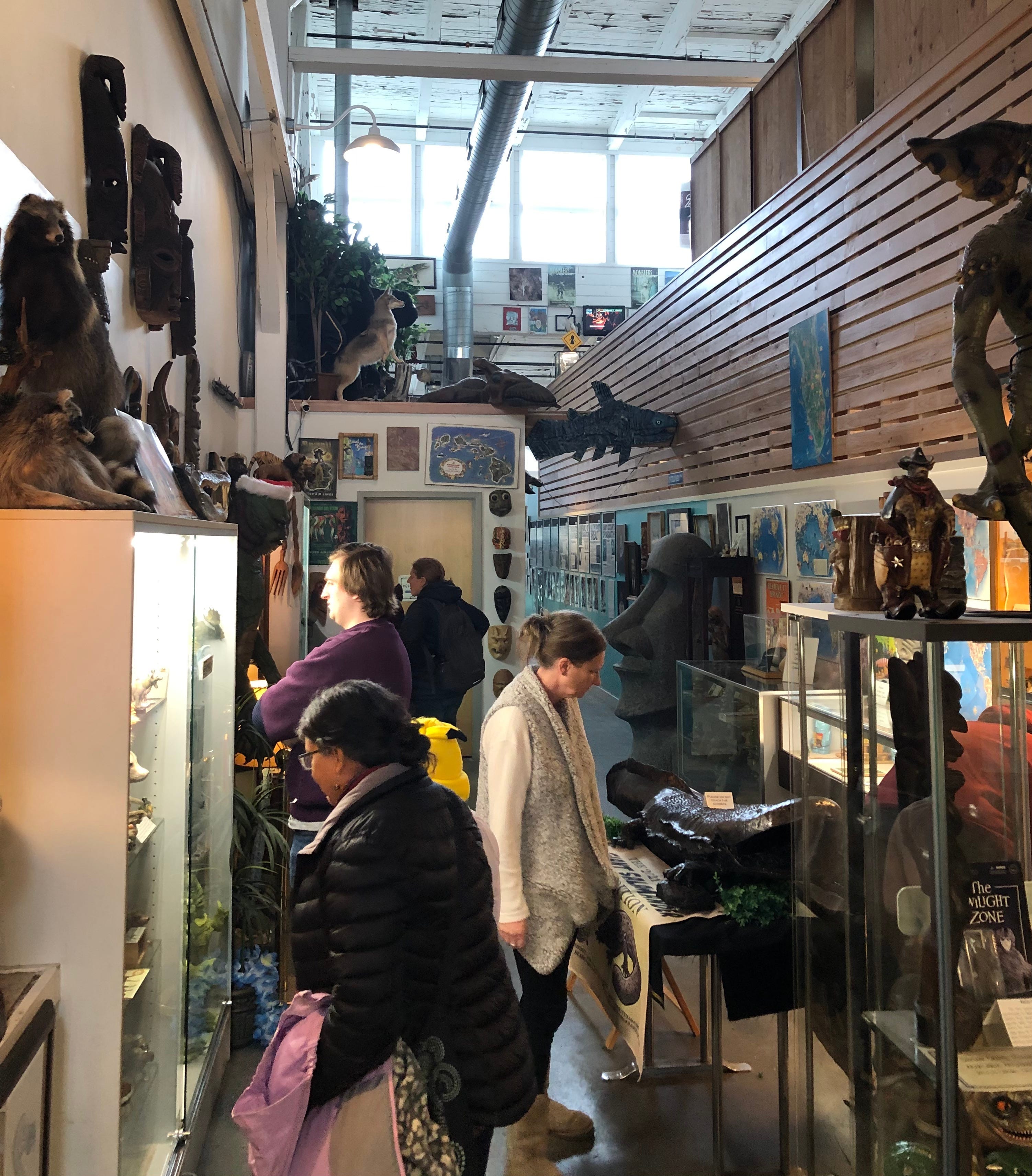
US: Finally, can you give any advice to a kid like me for exploring and discovering cryptids on their own?
CP: Well the most important thing is to learn all you can about the cryptids you are interested in and about the biology and ecology of the area where they live. That way you’ll know what you are looking for and you’ll know something about what you find. But you don’t have to wait to learn everything before going out and exploring, afterall one of the best ways to learn is to do! If you go out in nature looking for cryptids, you might not find one but I guarantee you will find something cool!
Chris Packard is also the organizer for the Bangor Authors' Book Fair and Literary Festival whoich takes place on Dec. 13, the largest author event in Maine, in it's 4th year with over 90 authors, six publishers and great programming. He created the non-proift group, Bangor Authors' Collaborative, to help it grow going forward.:
Check out more of Chris’ links here: Chris Packard Website
Interviews By Uma is a regular question and answer feature developed by ten-year-old Uma Szczesny and formatted and managed by her journalist dad. The column focuses on interviews between Uma and some of her favorite musicians, artists and creators. Uma is also a kid reporter for Manchester Ink Link. Her interviews have been published in several media journals and newspapers in the United States and Canada. For more information on Interviews By Uma, to read her archive or to propose or suggest an interview, email interviewsbyuma@gmail.com. Check out Dan and Uma’s books here:
That 3 headed coyote??? 😲😲😲
We took great- grandkids there ! Neat place !