

Bob Dylan Tuesday
Our Week Of The Bard Continues

We continue our celebration, frustration, irritation and adulation of the Great Zimmerman today with this incredible essay by one of our own, a friend to Day By Day, amazing writer and decent human Christopher DiLoreto.
Chris and I go back a few years and the essay you’re about to read appeared (as everything I’ll publish this week) in the chapbook I edited in 2021, Tiger Lovin’ Blues: A Bob Dylan Collection.
This week-long series will conclude with my own essay on Saturday, the day that my family will finally get to see Bob Dylan live in Laconia!
I wanted to give you all this essay off the front end of the week because Chris so perfectly encapsulates the raw enchantment of what being a disciple of Bob Dylan actually entails. How it changes you. What the poet means (or can come to mean) to those that listen. Really listen.
I’ll let Chris take over from here!
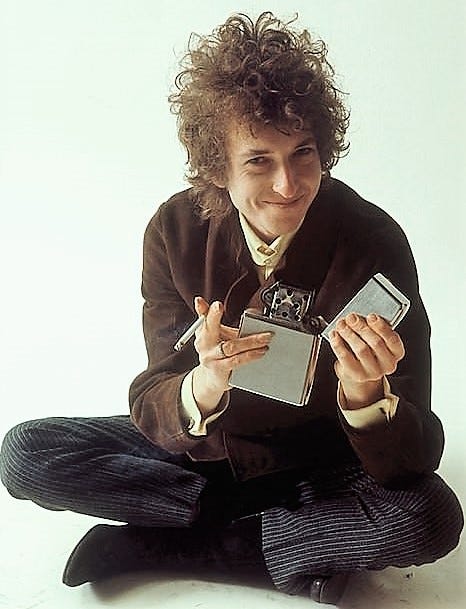
Walking with Bob, Together Through Life
By Christopher DiLoreto
It is 1999. A montage plays out on the TV screen – NBC – as I sit on the couch, fifteen years old and transfixed. It begins with the attempted misdemeanor arrest of a black man in Chicago that quickly escalates into a full-blown race riot. Meanwhile, young Julia Stiles is giving birth, estranged from her parents, the emerging child’s hippie father nowhere to be found, and she is SCREAMING and crying. Her father, unaware of this, is shown feeling regret. One of her brothers is wandering around New York with a broken heart after the love of his life left him for a bearded radical Jeremy Sisto. Her other brother is in Vietnam in the middle of the jungle, spraying machine gun fire and losing his mind. Back in the race riots, a black preacher races to find his son among the looters, admonishing him, taking the gun and stolen TV from his arms – and ends up shot dead by police.
This is the climactic scene that concludes the first of two parts of the made-for-TV miniseries The 60s. It’s largely now forgotten, perhaps owing to the fact that the 60s nostalgia that reached its zenith around 1999 has now reached a nadir – there is no Wikipedia page for this film, nor is possible to stream it – but for many reasons it shouldn’t be. The sheer raw emotion of this scene was seared into my young brain; it’s possible I’ve never shaken it. At minimum, we can say that I’ve never shaken the song I heard coming from the TV or the artist singing it.
Playing during all this human drama – in full, no less – was “Like a Rolling Stone.”
Surely, I had heard it before, in the background somewhere, maybe in the car on Oldies 103, but I hadn’t really heard it until now. I was really blown away. That unbridled fury, the openness of the scorn; sure, maybe its message, which boils down to “You reap what you sow – and I told you so” is undeniably self-righteous, but when delivered with that authoritative voice, backed by that combo of piano and organ, the unflinching guitar and drums of harmonica, the self-righteousness itself cannot be denied.
This was Bob Dylan? No wonder his name seemed to pop up so much.
So began my education. From “Mr. Tambourine Man,” I learned as a sensitive and often forlorn teenager how to begin walking the lesser-known paths I’m still on today. I made that deal, and stuck to it. From “Subterranean Homesick Blues” I came to understand there was another world underground and from “I Want You” I discovered that sometimes (especially when young), you just want someone, against all reason and sense and circumstance, maybe even against any ethics.
I learned from “Blowin’ in the Wind” and “The Times They Are A-Changin’” that many of us strive to understand this life and make it better, and that we can neither fully grasp nor fully control this process; from “The Hurricane” I learned about how the justice system really works.
“Like a Rolling Stone” still floors me, but if you walk with Dylan, as you yourself grow and change, the Dylan you need appears before you. As I advanced in age, through my late 20s and early 30s, Dylan again found me through The Band – his band – when I discovered he was responsible for so many of the words on Music From Big Pink. In “Tears of Rage”, the boys channel their sometime leader’s vision of struggle with America and entropy; so it goes in many ways with “This Wheel’s On Fire.” Unsurprisingly given how trapped I often felt during this time in life, “I Shall Be Released” became my anthem and my hymn.
I fell in love with The Basement Tapes and from there fell backward into the deep cuts of Blonde on Blonde. I swooned, and still swoon, over the smirking, frustrated-but-unyielding complications of “One of Us Must Know (Sooner or Later)” and “Stuck Inside of Mobile with the Memphis Blues Again.” The former has, I still insist, the best piano part of any Dylan tune and the latter, with its nine epic verses and unparalleled wordplay (not to mention at least a hint of the scorn that had hooked me in the first place).
Once my first marriage ultimately collapsed, I found I suddenly understood how “Sad-Eyed Lady of the Lowlands” and “Sara” could devolve into “Idiot Wind.” And I think you need at least 30, 35 years under your belt before you really get “Shelter From the Storm,” “Simple Twist of Fate,” and “Tangled Up in Blue.”
Similarly, as my life came to pass every few years through increasingly definitive phases, as I had to leave people and places and ways of being behind, I came to get – again and again – “My Back Pages.”
Twenty one years ago, I thought “Changing of the Guards” was a super cool apocalyptic tune. Now, exactly sixteen years (six-teen-years!) into my life in New Hampshire, it plays like a description of the world before me.
Most starkly, I always hated “Forever Young” because I thought it was corny as hell and because I’ve never found youth, at least as commonly understood, to be particularly desirable. Until just last summer. I was driving on my way to a mini-pilgrimage and accidentally listened to an old cover by the Jerry Garcia Band and broke down in tears and knew it to be one of the best, purest blessings ever, ever put to song. Probably, it’s no coincidence that I am now a father of sons, and the song is written by a father for his son (though it may also be no coincidence that as my aging body ceases to be able to do as it once did, I no longer harbor any scorn of my own for youth).
I love all of his later albums, too, but experience has now left me certain that I will enjoy them even more as I step into the later stages of my own life, perhaps even after he has left us here, bereft, to settle our mortal affairs ourselves. But that’s his gift to us, to our lives, our whole lives.
People who find Dylan inscrutable simply haven’t lived into understanding him. And people who call him reclusive and mysterious are merely frustrated that he doesn’t come when we call. That isn’t his way and it isn’t his role – but the truth is that he’s actually given hundreds of interviews over the years. In at least one, he’s hinted that what he does and says in life and music is directed by God. Most other times in my life, I would dismiss a suggestion like this as insane or arrogant or silly or ignorant; now I take it for granted as true. (And perhaps it’s no coincidence that I am right now very close to Dylan’s own age when he entered his famous heavy Christian period.)
Hunter Thompson dedicated Fear and Loathing in Las Vegas in part “to Bob Dylan, for Mister Tambourine Man” – and he had that spot on. Perhaps Dylan wasn’t born the Tambourine Man, but he certainly became him. He accepted the bargain and he followed and he assumed the role. Now it’s me standing in those ancient, empty streets, chasing a shadow of something that Dylan himself actually sees. But I’ve accepted the deal, too. All my life, he’s played the song for me – and the least I can do is follow.
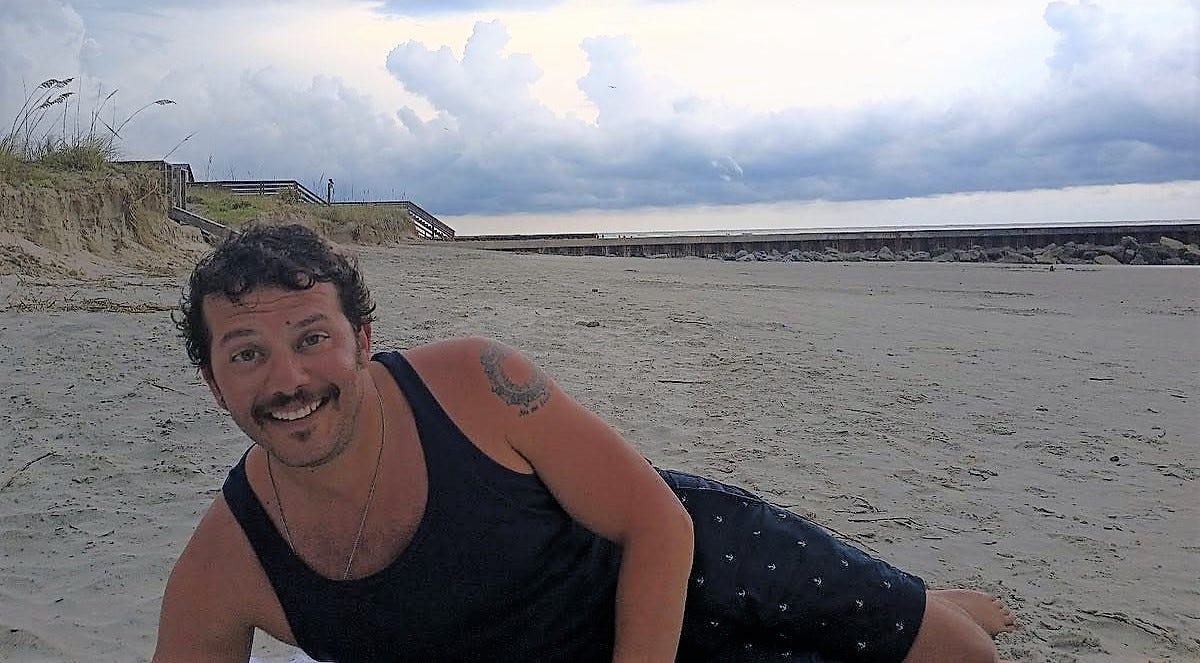
For more info on Chris, his writing and socials, please just let us know in the comments and we or he will drop in a bunch of links!
Wonderful!
Although Chris and I are years apart, this essay closed the gap. Wonderful essay about Dylan.